
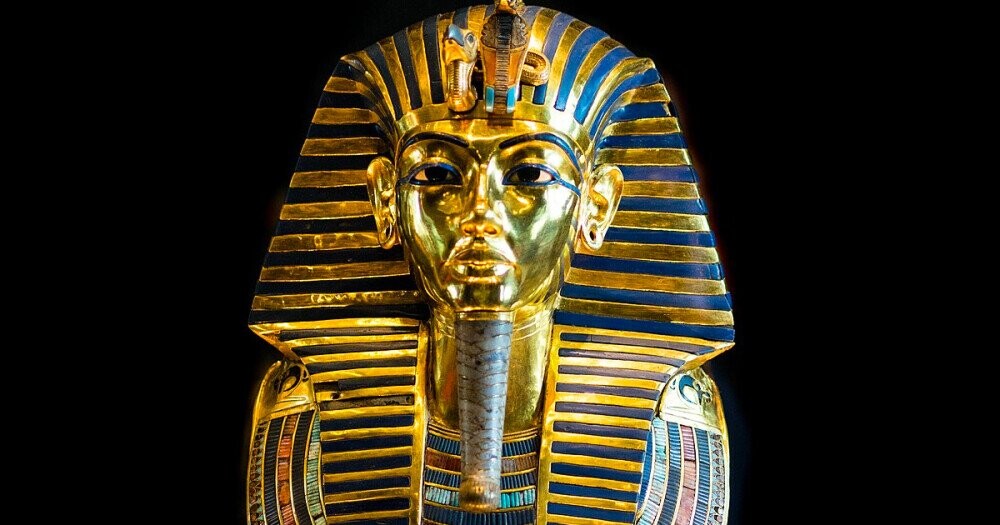
… so did the rumor of a “mummy’s curse,” implying that King Tut cast misery on those who bothered his tomb.
Now curses are about as real as leprechauns, lucky numbers, or the possibility of George R.R. Martin finishing a book series. That being said, the deaths of people involved with turning over Tut’s tomb sure were.
Among those who supposedly received the brunt of the curse was George Herbet, 5th Earl of Carnarvon, who funded the discovery. Only months after uncovering the tomb, he died of blood poisoning from an infected mosquito. Allegedly, Herbert’s dog died at the exact same time, and a bunch of lights in Cario went out. While next to meet his doom would be Sir Bruce Ingham, who was gifted a paperweight of a mummified hand by his good friend Carter, that read “cursed be he who moves my body.” Not long after, Ingham’s home turned into a towering inferno. Twice.
Another obscure death story is Hugh Evelyn-White’s, a British archeologist who is thought to have helped uncover the site where the pharaoh lay (literally chilling in his own company until some d-bags had to infiltrate his privacy.) Evelyn-White actually took his own life, writing a bizarre message using his blood as ink: “I have succumbed to a curse which forces me to disappear.” He was followed by Aaron Ember, an American Egyptologist who was close with most of those who excavated the tomb site. In 1926, Ember, his family, and their maid passed away in a house fire soon after having guests over.


0 Comments