
Chances are, if you’ve watched a movie or TV show in the past 20 years in which the characters visit a Latin American, Middle East, or South Asian country, you’ve noticed a bit of saturation or color filters in certain scenes. This practice uses a yellow filter to present those countries, compared to other (more Eurocentric) locations of that specific piece of media. Now, generally, the idea of letting audience members know where the characters are located in a movie or TV Show is pretty helpful. However, the use of these filters comes from a history of stereotypical portrayals of brown people in the media and industry overall, making the filters problematic at best and downright racist at worst. It is a very outdated practice that has been called out on multiple occasions yet still continues to appear time and time again.
First, a little history on color correction in movies and media. Before digital cameras were invented, color correction and color grading options were extremely limited. In fact, during the silent film era, people in charge of color correction, or “colorists,” in the film industry used to hand paint full reels of film.
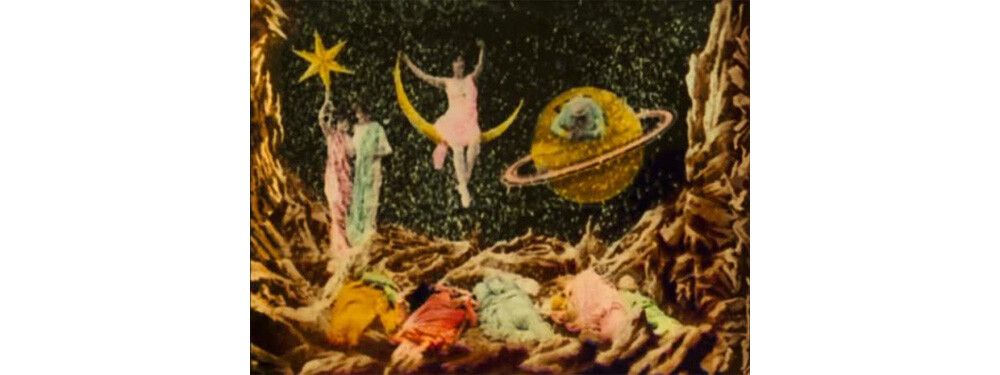
Star Film Company
This technique allowed people to see movies in color like never before. Later on, in the ’20s and ’30s, when the magical world of Technicolor appeared, colorization in film became much easier for filmmakers, creating a new standard by the ’60s. Machines like the Hazeltine Color Analyzer allowed filmmakers to balance color between three main tints: red, green, and blue.
In the year 2000, and with a great shift in technology, everything started to change. Filmmakers began using filters or different types of exposures to present different scenarios in their pieces. That same year, Steven Soderbergh released Traffic, in which he used three main filters to distinguish the different stories that the film was telling. There was a blue-ish filter for one story, a washed-out white for another, and a yellow saturation for the third story in Mexico.
Traditionally, oversaturation or yellow filters and tones were supposed to depict that an area or scene has hot, tropical, and/or dry weather, especially compared to other locations that may show up in the same piece of media. However, the execution of this filter was quick and easy. With film editing moving digital, people creating things could get things done faster. Eventually, a version of very fancy filters was created as a standard for a lot of film editing. This pushed the use of the filters more and more, to the point where the yellow filter became a standard of sorts to depict Latin America or South Asia, while the blue filter would show European and North American countries. Soon enough, filmmakers could slap these filters on top of virtually any location and present it as someplace else.
More importantly, besides connoting warm weather, this oversaturated filter added a sort of grit and even dangerous or unhealthy subtext. People began showing low-income countries and violent places with this yellow filter. In addition, the high-contrast filter makes darker skin tones lose some of their features, blending them in with their background while making lighter skin tones stand out. This is especially problematic if the film puts main characters, with lighter skin tones, in locations filled with people of color since the yellow filter helps depict them as white saviors or heroes.
Let’s jump forward a bit. A primary example of the use of the yellow filter was the hit TV series Breaking Bad. Anytime our white main characters would get close to the southern border of the United States and venture into Mexican territory, the filter would be a straw-like yellow. In fact, the contrast became so intense that fans of the show started calling this filter the “Mexico filter.” While there may be warmer temperatures in Mexico and other Latin American countries during certain seasons, the context with which this filter was used — especially in this show — presented Mexico with a predetermined bias. The filter itself only continued adding to the stereotyping of Latin America and South Asia through the lens of Western society, so much so that people made memes about it:
The ‘Mexican’ Movie Filter Is Worse Than We Thought
Source: Pinoy Daily News


0 Comments