
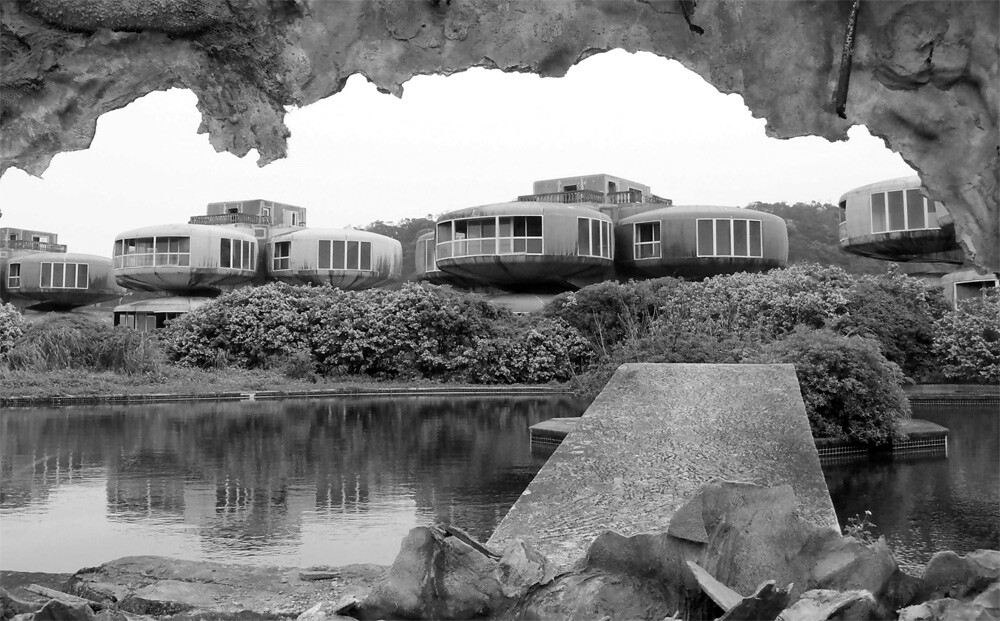
Every city has that one bizarre abandoned landmark, beloved by urban explorers and local needle enthusiasts alike. But lately, urban regeneration has claimed many of our most obviously cursed ruins. In Taiwan, for example, developers eventually demolished Sanzhi UFO City, a complex of futuristic living pods left to rot after a wave of mysterious suicides supposedly derailed construction. All Edinburgh mourns the loss of the Craigmillar Gulliver, a terrifying children’s playground of crumbling concrete tunnels designed by an imprisoned murderer. And Los Angeles has been gradually removing the decaying remains of Murphy Ranch, the self-sustaining 1930s compound built by suspected Nazi sympathizers under the guidance of a mysterious German psychic.
But such losses pale in comparison to the work currently underway in Germany. It brings us absolutely no pleasure to report this, but the local government is finally redeveloping Spreepark, the abandoned communist amusement park slowly being reclaimed by the forest on the outskirts of Berlin. The city is planning to preserve a few Spreepark artifacts as part of a new cultural center, but it won’t have the same magic. No cultural center is going to teach curious teens about the wonders of tetanus quite the way Spreepark did. So now might be the perfect time to take a look at the history of the park, featuring delusional Albanian kings, stolen roller coasters, tragic carousel accidents, and a surprising amount of cocaine.
Spreepark Was Berlin’s Biggest Amusement Park … Until It Was Hijacked To Peru
For many years, if you took Berlin’s S-Bahn to Treptower Park, then continued south into the Planterwald, you would find yourself completely lost. But if you continued wandering around for another half hour, surviving on rainwater and berries, you might be lucky enough to reach a truly magical place. A mysterious wonderland of toppled dinosaur statues and mouldering merry-go-rounds, silently fading away into the trees. This was Spreepark, once the biggest amusement park in Berlin.

Back in 2002, humble Berliners woke up to the news that the park was gone. Not just out of business either, the best rides were literally hightailing it to Peru in a series of shipping containers. But what kind of Carnie Sandiego could hijack an entire theme park? Well, the mastermind was none other than the park’s owner, Norbert Witte, who had been forced to declare bankruptcy after visitor numbers fell. Luckily, some guy he ran into mentioned that a theme park would definitely do great in Peru, so Norbert packed up six of his best rides and skipped town. He reportedly convinced authorities he was taking the rides for repairs, although we prefer to imagine a guy trying to clear airport security with an entire skycoaster taped underneath his shirt.

The rest of the park was simply abandoned, with a combination of legal wrangling and lack of interest from other tenants preventing the city from finding another use for the site. So poor Spreepark was left to decay, becoming one of Berlin’s creepiest attractions in the process. By the way, if any of this is looking familiar it’s because the climactic scenes of the 2011 movie Hanna were filmed in the park. Or possibly because that wolf tunnel appears in your dreams every night and whispers forbidden truths. One or the other!

The Bizarre Abandoned Communist Theme Park Problem In Eastern Europe
Spreepark was born back in the 1960s. The Berlin Wall had just gone up, and the East German government decided that the best way to cheer everyone up would be with a bunch of sweet Ferris wheels. This wasn’t an unusual move—the whole Eastern Bloc was crazy for amusement parks. The Soviets were particularly big fans, and a city wasn’t considered complete in the USSR without a bunch of zany rides at the edge of town. Even at the height of the 1930s Stalinist purges, work was underway on a 100-foot-tall spiral slide in Moscow. But Stalin had finally gone too far and a storm of public criticism erupted, claiming that the slide was far too safe and boring. So they just started letting people strap on parachutes and jump off the top.





0 Comments