
Established at the height of French film pomposity, an auteur is a commercial artist who manages to imbue his entire oeuvre with not just competence and style but also an elan of the soul (told you this was going to be both French and pompous.); letting their personal views, values, and even desires mold the recurring themes in their work. Auteur theory is typically applied to genius directors like Francois Truffaut, Lois Weber, and, of course, Michael Bay. However, it can be applied to most collaborative artforms like, say, comic books. But be careful about who you want to put to the auteur test. After all, the more content they put out, the more obvious the patterns of their inner desires become.
Marvel
Continue Reading Below
If anyone aside from Stan Lee and Jack Kirby deserves the status of comic book “auteur,” it has to be Chris Claremont. In 1975, he was given control of the already ongoing, commercially disastrous Uncanny X-Men series. Together with graphic artist John Byrne, Claremont spent the next 16 years transforming the X-Men into not just an entirely new beast (including Beast) but the most long-running, coherent and popular comic book series of all time — its legendary story arcs that have shaped entire franchises such as the X-Men movies and, even more obviously, the Ducktales reboot.
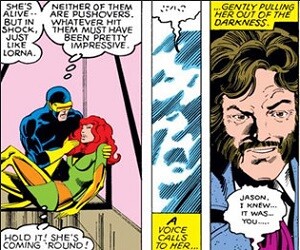
There’s just one tiny challenge to applying auteur theory to Claremont’s work — there’s so much of it. Yet this is the Shadow King-sized mission undertaken by The Claremont Run, an academic project funded by the Canadian government’s Social Sciences and Humanities Research Council. Since 2019, Dr. J. Andrew Deman and his extensive research team have been combing through the 8,360 pages of Claremont’s Uncanny X-Men to catalog and analyze even the tiniest recurring detail down to how often Wolverine is out of costume or how often Jean Grey gets knocked unconscious.
Marvel
Continue Reading Below
As such, the project has become the most convincing argument for Claremont as a true auteur and the enduring X-Men universe as a manifestation of his personal vision. Consulting the Claremont Run, the artist’s main themes can be best described as an unrelenting focus on mental trauma, otherness, and empowerment. These are found in all elements of the X-Men stories — even in the Marvel-enformed X-Men Babies spin-offs.
Continue Reading Below
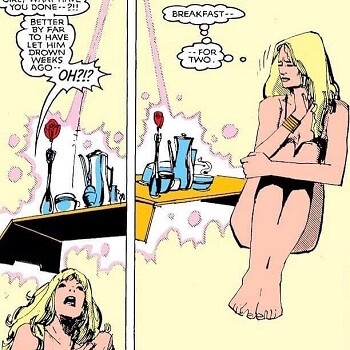
Take, for example, the female characters Claremont created. An important throughline here is that they are typically depicted as strong, even overpowering, and morally ambiguous women, like the seductive and domineering Mystique …

Marvel
Or the seductive and domineering Madelyne Pryor …

Marvel


0 Comments